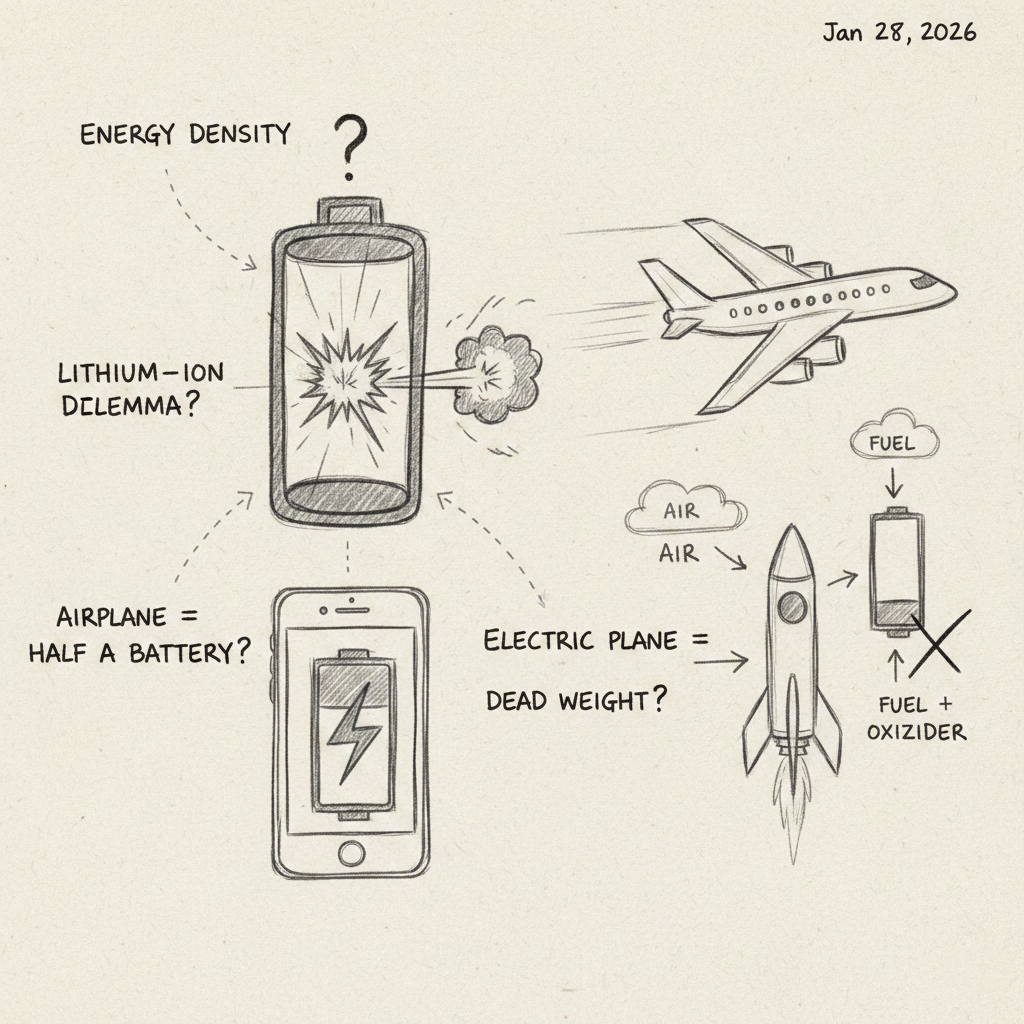
The Energy Density Dilemma: Why Your Phone is a Firework and Planes Aren’t Electric (Yet)
We are obsessed with energy density. Every year, the goal is the same: pack more power into smaller, lighter packages. But as we push the limits of Lithium-ion technology, are we approaching a fundamental wall of physics?
🔋 The “Dynamite” Reality
A battery isn’t just a fuel tank; it’s a delicate chemical balance. In our quest for capacity, we’ve reached a point where modern devices are essentially structural shells built around a volatile core.
Think about it:
- Structural Integration: We moved to non-removable batteries because the cells became too fragile and energy-dense to be handled safely by consumers.
- The Chassis as Armor: The phone’s frame isn’t just for aesthetics; it acts as the battery’s primary containment unit.
- Waterproofing: We waterproofed everything because high-density energy storage and water are a catastrophic, combustible mix.
In essence, you are carrying a device powered by the energy equivalent of a large firecracker. When we chase density using classic chemical approaches, the line between “battery” and “explosive” starts to blur.
✈️ The Aviation Lesson: Why Airplanes are Different
The biggest hurdle for electric aviation isn’t just weight—it’s mass loss.
When a traditional plane flies, it consumes fuel. As the fuel burns, the plane gets lighter, requiring less energy to stay aloft. More importantly, jet fuel is only “half” of the battery—it reacts with oxygen from the environment. A battery, however, is a closed system. It carries all its “reactants” inside.
The Efficiency Gap:
- Rockets: Carry everything (fuel + oxidizer). Fast, but incredibly inefficient for long distances.
- Jet Engines: Take half their energy source from the air, making them remarkably efficient.
- Electric Planes: Carry the same heavy “dead weight” from takeoff to landing, regardless of how much energy is left.
Until we find a way to “breathe” energy from the environment (like metal-air batteries), the current approach to density will likely never make long-haul electric flight viable.
🛠️ Where does it end?
Ten years ago, a battery-powered circular saw or angle grinder seemed like a toy. Today, they are industry standards. We’ve successfully miniaturized power for tools and cars, but we are reaching the “peak” of what traditional chemistry can safely handle.
I’m curious to hear your thoughts:
- Is there a hard ceiling for Lithium-ion safety?
- Will we ever see a “breathing” battery that mirrors the efficiency of a jet engine?
- Or are we just going to keep building stronger shells around more volatile chemicals?
#Engineering #TechTrends #EnergyStorage #ElectricAviation #Innovation #LithiumIon #Physics